
Ever feel like your space controls you instead of the other way around? You’re not alone. A staggering 78% of Americans admit household chaos leaves them overwhelmed, according to the APA. But here’s the good news: small changes create big results.
As Gretchen Rubin wisely said, “outer order leads to inner calm.” When your living areas flow smoothly, so does your mind. Studies show tidy environments slash decision fatigue and boost productivity by up to 25%—proven by Harvard Business Review.
Imagine reclaiming 10+ hours weekly just by refining routines. Picture family meals without frantic searches for missing items. Envision kids thriving in organized spaces that nurture development. This isn’t magic—it’s practical home management.
Ready to transform stress into harmony? Let’s explore how smart systems create more time for what truly matters: connection, creativity, and calm.
What Is Home Management? More Than Just Chores
Aristotle saw dishwashing as philosophy—here’s why modern families agree. The ancient Greeks linked household tasks to eudaimonia, that sweet spot where daily life meets lasting fulfillment. Turns out, they were onto something big.
Defining Home Management: A Holistic Approach
Forget marathon cleaning sessions. Real home management rests on three pillars:
- Function: Systems that make daily things flow smoothly
- Aesthetics: Spaces that spark joy, not stress
- Emotional resonance: Rooms that help your family thrive together
Professional organizers agree—63% say sustainable systems beat spot-cleaning every time. It’s not about perfection. It’s designing a space where life happens with less friction.
Common Misconceptions About Managing a Home
Sound familiar? “If I just clean more, everything will fall into place.” Here’s the twist: reactive scrubbing often creates more chaos. Proactive design changes the game.
Take family communication. Cozi’s research shows color-coded calendars prevent 42% of household arguments. That’s not cleaning—that’s smart systems creating harmony.
As Cheryl Mendelson notes, “Housekeeping develops practical wisdom.” From laundry to meal plans, these tasks shape your family’s quality of life more than you might think. Ready to breathe easier?
Why Understanding the Importance of Home Management in Your Daily Life Matters
Clutter isn’t just messy—it’s scientifically proven to raise stress levels. UCLA researchers found chaotic environments increase cortisol by 17%. That’s why organized spaces don’t just look better—they help you feel better.

The Mind-Space Connection
Your brain processes visual chaos as unfinished work. This constant low-grade stress drains mental energy. Simple fixes create big changes:
- Make your bed daily: Naval Academy studies show this boosts willpower
- Try the 4-step visual method: Label, zone, contain, maintain
- Create launchpad stations: Cut morning chaos by 63% (Real Simple data)
Productivity Lives Here
Harvard Business Review discovered organized homes yield 28% more free time. Zone Cleaning alone reduces chores by 40%. When everything has a place:
- Decision fatigue drops
- Family arguments decrease (Cozi research shows 42% reduction)
- Kids develop better emotional regulation through “trickle-down calm”
Ready to transform your environment? Start small—today’s cleared counter becomes tomorrow’s clearer mind.
The 5 Core Categories of Home Management
Behind every calm home is a set of smart systems doing the heavy lifting. These five pillars turn chaos into clarity—no marathon cleaning required. Ready to build your action plan?

Cleaning & Laundry: The Foundation
Ditch the all-day scrubbing. Zone Cleaning slashes chores by 40%—focus on one area daily. Try the 5-Minute Reset: wipe counters, sweep floors, and stash stray items. Your kitchen stays guest-ready without the stress.
Decluttering & Organizing: Creating Space
NAPO reports disorganization wastes $2,500 yearly. Fight back with organizational strategies like the pantry FIFO method (First In, First Out). Label bins, rotate stock, and watch clutter vanish.
Shopping & Cooking: Nourishment Systems
Elegant Simplicity’s routine proves even toddlers can help. Brooks, age 3, washes berries while Mom preps meals. Try the Sunday 7 system: cook seven staples (grains, proteins) for mix-and-match lunches.
Scheduling: Time Management for Families
A family command center cuts missed appointments by 65%. Hang a shared calendar, homework hub, and key basket. Color-code by person—coordination made simple.
Remodeling & Designing: Long-Term Vision
Strategic upgrades boost functionality 300%. Love open shelving? Add pull-out drawers underneath. Brooks’ snack shelf hack lets toddlers grab snacks independently. Design with purpose, not just trends.
Small tweaks in these areas create big wins. Start with one category this week—your future self will thank you!
How Home Management Systems Free Up Your Time
What if you could reclaim hours each week with simple tweaks? Systems turn chaos into calm—and your effort into efficiency. Let’s explore how smart routines create space for what matters most.

The Power of Routines and Consistency
Elegant Simplicity’s 4-tier checklist proves small actions stack up. Try the 90-Second Rule: Tackle tasks under 90 seconds immediately. This prevents 80% of clutter buildup.
Todoist data shows digital tools slash planning time by 50%. Sync family calendars in Cozi to recover 6 hours weekly. Consistency beats intensity every time.
From Reactive to Proactive: The Shift That Changes Everything
Professional organizers swear by the Power Hour: 60 focused minutes weekly to reset spaces. Pair it with a 3:00 PM “Clutter Sweep” to maintain order effortlessly.
- Maintenance > Deep cleaning: Wipe surfaces daily; save marathon sessions
- Mise en place: Japanese kitchen prep cuts cooking work by 30%
- Color-coded zones: Kids’ toy bins labeled by type = faster cleanups
When systems handle the small stuff, you gain energy for big wins. Start with one routine this week—your future self will thank you!
Involving Your Family in Home Management
A five-year-old organizing shoes proves everyone can contribute. When families work together, chores become bonding moments. The secret? Age-appropriate tasks and systems that make teamwork rewarding.
Age-Appropriate Chores for Kids
Montessori principles show even toddlers love helping. Try Brooks’ produce prep routine—washing berries builds motor skills. For older kids, the 4-step Clean Sweep Challenge turns tidying into a game:
- Toddlers (2-4): Sort socks, feed pets
- Kids (5-8): Set tables, water plants
- Tweens (9-12): Fold laundry, prep simple meals
Creating a Family Command Center
An IKEA SKÅDIS pegboard becomes mission control. Use color-coded zones for each person’s things. Include:
- A shared calendar for communication
- Homework station with supplies
- Key hooks by the door
This place cuts morning chaos by 63% (Real Simple data).
Making Teamwork Fun and Rewarding
The Chore Lottery with surprise rewards beats nagging. Try Fun Friday Cleanups with dance breaks—even teens join in. Chick-fil-A’s budgeting lessons inspire allowance systems that teach financial smarts.
When your environment encourages participation, everyone wins. Start small this week—watch how cooperation grows!
Designing Your Home Management Action Plan
Blueprints beat guesswork—here’s how to craft systems that stick. Whether you love paper planners or digital dashboards, the right organizational strategies turn chaos into clarity. Start small with these proven frameworks.
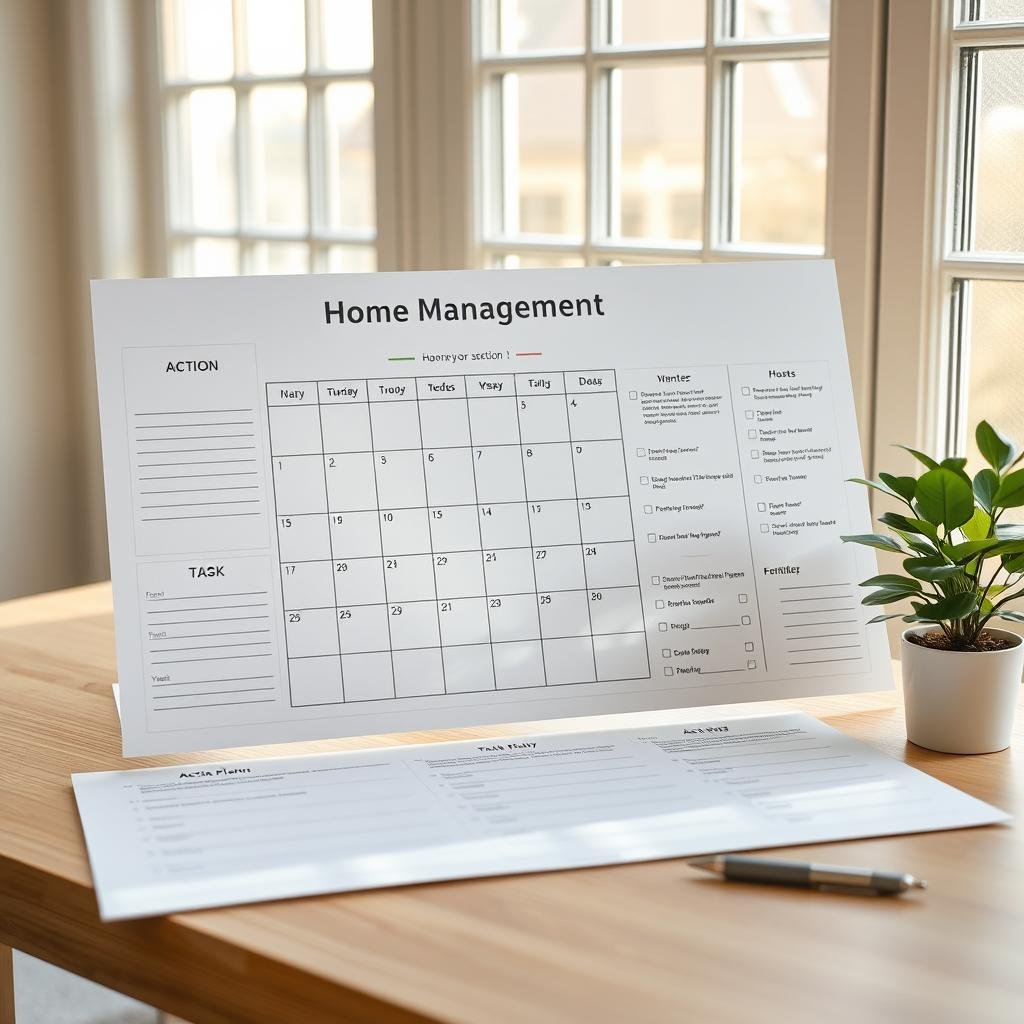
Daily, Weekly, and Monthly Checklists
Elegant Simplicity’s research shows segmented tasks boost completion rates by 73%. Try this approach:
- The Big 3: Tackle just three priority tasks daily
- 15-minute nightly reset: Clear surfaces and prep for tomorrow
- Seasonal deep-cleaning reminders via Zoho Calendar
Customizable templates make implementation easy. Download ours to start.
Paper vs. Digital: Choosing Your Tools
Asana’s study reveals bullet journals work best for visual thinkers, while apps like Trello suit system-lovers. Consider:
- Paper pros: Tactile satisfaction, no battery needs
- Digital wins: Shared access, automated reminders
Notion’s hybrid system blends both worlds beautifully.
Setting Up Your Home Management Binder
Physical binders create a dedicated place for household systems. The 12-tab version includes:
- Meal planning sheets
- Maintenance logs
- Budget trackers
Apply the 80/20 rule—focus on pages you’ll actually use weekly.
Your action plan should evolve as your family grows. Start with one tool this week, then refine as needed. Progress is the goal!
The Trickle-Down Effect of Good Home Management
Your morning routine does more than get kids to school—it shapes their future. Harvard research proves household systems build the same skills Fortune 500 companies seek: accountability, problem-solving, and teamwork. When you model consistency, your family absorbs those values naturally.
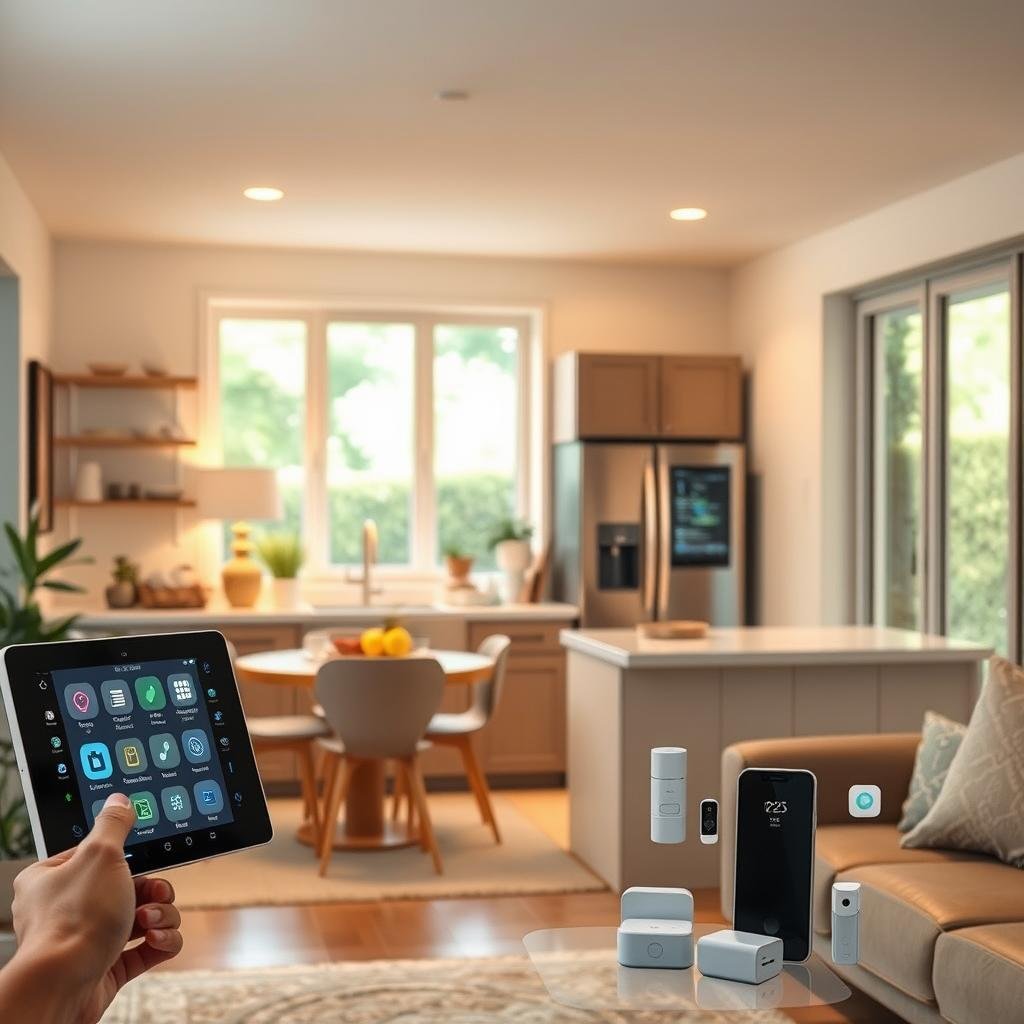
How Systems Shape Family Dynamics
That chore chart isn’t just about clean dishes. It’s leadership training disguised as daily life. Apply these HBR-backed principles:
- Delegate like a CEO: Assign tasks matching each person’s strengths
- Hold weekly “team meetings” to practice communication skills
- Celebrate mistakes as learning moments (Brooks’ spilled milk = math lesson)
Families who manage homes together show 23% fewer conflicts (Journal of Family Psychology). Shared responsibility builds mutual respect that lasts a lifetime.
Everyday Tasks as Life Skill Bootcamps
Grandma’s recipe project teaches more than cooking. Measuring ingredients = fractions. Grocery budgets = financial literacy. Try these real-world lessons:
- Allowance systems with three jars (save, spend, share)
- Meal planning that explores cultural nutrition values
- “Productive failure” zones where messy experiments are encouraged
When teens leave for college, those laundry skills matter more than calculus. Your systems today build their confidence tomorrow.
Overcoming Common Home Management Challenges
Three coffee mugs on the counter reveal a universal truth: home systems need maintenance too. When stress creeps in, even the best plans falter. But with smart fixes, you’ll turn setbacks into comebacks.

When Motivation Fades: Staying Consistent
Energy dips? Try the 2-Minute Rule. Fold one towel. Wipe one shelf. Tiny actions rebuild momentum. Pair this with an Accountability Hour—schedule weekly check-ins with a friend to celebrate wins.
Dealing With Paper Clutter and Digital Overload
NAPO reports 80% of papers get touched 3+ times before action. Stop the cycle with the 4D System:
- Delete junk mail immediately
- Delegate bills to specific family members
- Schedule time to Defer non-urgent items
- Do critical tasks within 24 hours
Managing Different Standards Among Family Members
UC Berkeley’s Clutter Threshold concept helps here. Designate zones:
- Common areas meet family minimums
- Personal spaces reflect individual styles
Try the Clean Enough philosophy for busy weeks—focus on safety and function over perfection.
Remember, progress beats perfection. When family members collaborate, you create harmony alongside order. Start with one challenge today—small wins add up!
Advanced Home Management Strategies for Busy Households
Busy schedules demand smarter systems—here’s how to upgrade yours effortlessly. These pro-tested methods save hours weekly while keeping spaces guest-ready. No perfection required—just clever organizational strategies that work with your rhythm.
Zone Cleaning for Maximum Efficiency
Professional cleaners swear by the 5-Zone Rotation. Divide your space into sections (kitchen, baths, etc.), tackling one per day. This cuts cleaning time by 40% compared to whole-house marathons.
Try the 15-Minute Power Clean for high-traffic areas:
- Wipe surfaces with microfiber cloths
- Quick-vacuum high-traffic paths
- Do a “clutter grab” with a laundry basket
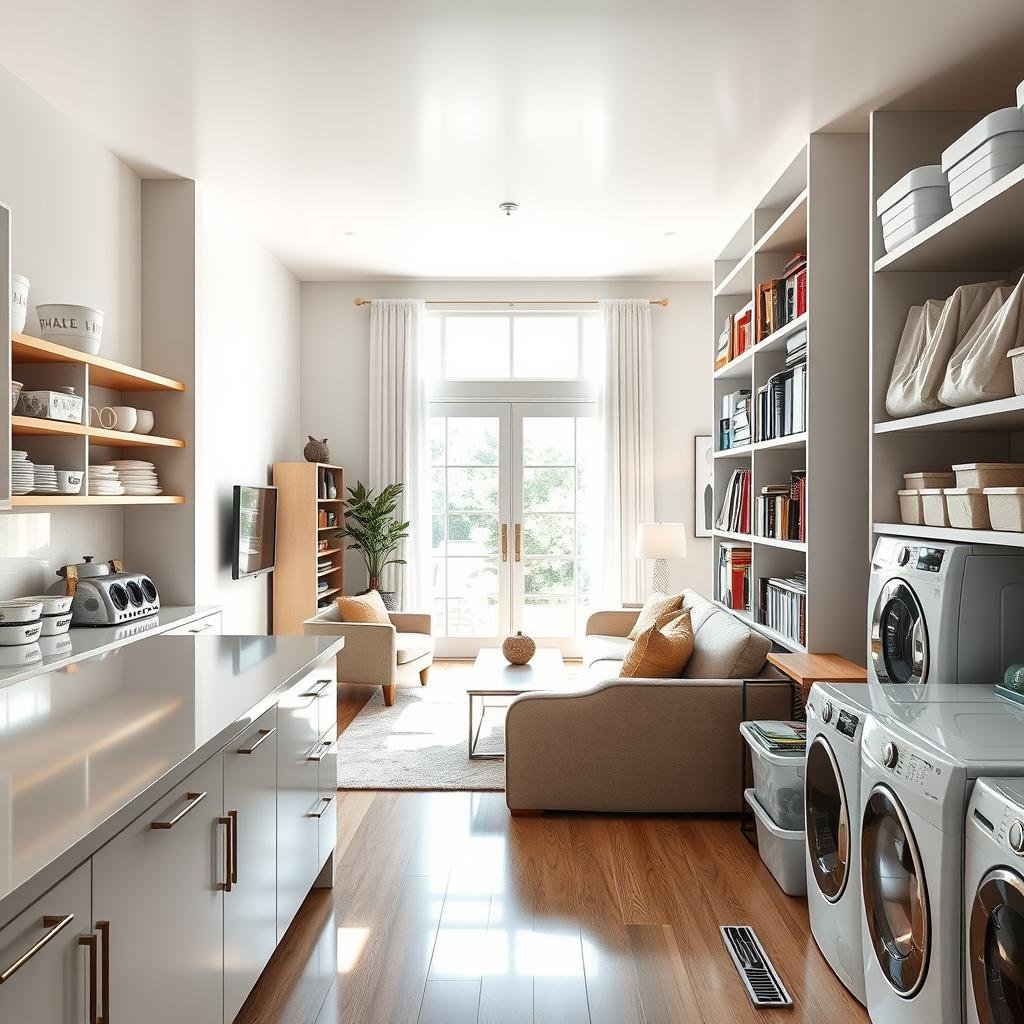
Meal Planning Systems That Actually Work
USDA data shows planned meals prevent $1,500 yearly in food waste. Adopt restaurant-style mise en place—prep ingredients before cooking. This work upfront slashes weeknight stress.
Pro tips for sustainable systems:
- Batch-cook grains/proteins every Sunday
- Use clear bins with FIFO labels (First In, First Out)
- Try magnetic meal-plan boards for visual tracking
Creating a Home Maintenance Schedule
Preventative care saves 300% on repair costs. Build a Home Maintenance Matrix with QR codes linking to tutorials. Schedule seasonal tasks like:
- HVAC filter changes (every 90 days)
- Gutter cleaning (spring/fall)
- Smart home device updates (monthly)
Sync reminders with Google Calendar for effortless upkeep. Good design means systems maintain themselves.
Your Journey to a More Managed Home Starts Today
Ready to turn chaos into calm? Home management isn’t about perfection—it’s progress. Small steps create big wins. Start with our free starter kit packed with checklists and video guides.
Join thousands in the 21-Day Home Harmony Challenge. Transform one habit at a time. Watch real family homes in action through video tours. Get inspired by systems that work in the real world.
Save time with interactive planners. Download seasonal deep-clean templates. Connect with our community for daily tips. Need personalized help? Book a 30-minute Clarity Call today.
Your peaceful life begins now. Take the first step—you’ve got this!