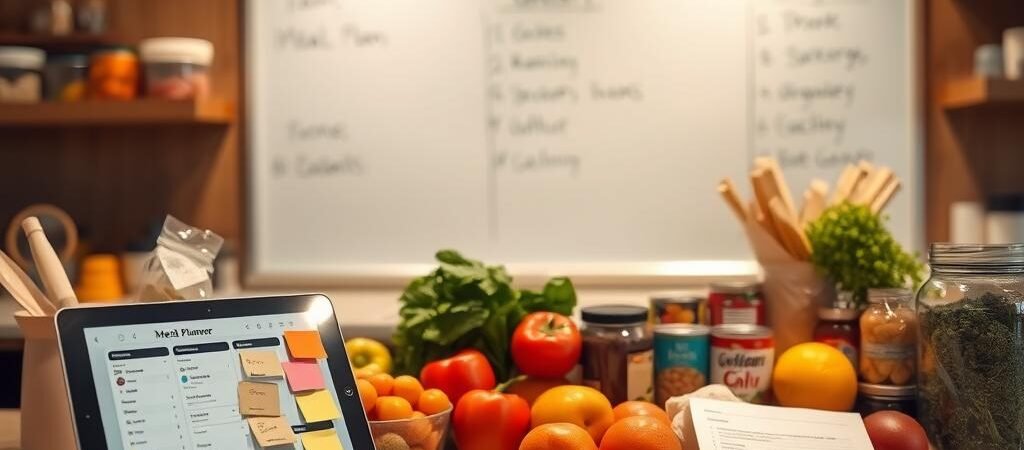
Are you tired of last-minute decisions and chaotic kitchen moments? Combining meal planning with grocery management can transform your weekly routine into a stress-free success story. Imagine saving time, reducing waste, and enjoying vibrant meals—all while sticking to your budget.
Did you know that 78% of households who plan their meals report less food waste? Plus, 32% save over two hours weekly by avoiding last-minute decisions. With a little planning, you can balance nutrition, budget, and family preferences effortlessly.
Ready to cut your grocery bills by up to 25%? Our step-by-step guide will show you how to use seasonal produce and smart strategies to create delicious, budget-friendly meals. Say goodbye to chaos and hello to empowered choices!
Why Meal Planning and Grocery Management Matter
Want to take control of your time and budget with a simple strategy? Combining organized meal planning with smart grocery shopping can make a world of difference. It’s not just about what you eat—it’s about creating a system that works for you and your family.
The Benefits of Organized Meal Planning
Did you know that meal planning can cut decision fatigue by 40%? It’s true! When you plan ahead, you ensure balanced nutrition while saving time. Families who use organized systems save up to 90 minutes weekly, according to MyPlate tip sheets.
Plus, planned shoppers make 23% fewer impulse purchases, as shown by NIH studies. This means more money stays in your pocket. Imagine transforming those stressful “what’s for dinner” moments into confident answers with a proven framework.
How Grocery Management Saves Time and Money
Strategic grocery shopping is a game-changer. USDA reports show that families of four can save $1,500 annually by adopting smart shopping habits. By avoiding common budget-busting traps, you can stretch your dollars further.
Learning to decode food labels using FDA guidelines helps you make smarter choices in every aisle. This not only saves money but also ensures you’re bringing home healthier options for your loved ones.
With a little effort, you can turn grocery shopping from a chore into a time-saving, budget-friendly activity. Ready to get started?
Essential Steps for Effective Meal Planning
Ready to simplify your weekly routine with a clear, actionable approach? Taking control of your meals doesn’t have to be overwhelming. With a few strategic steps, you can create a system that saves time, reduces stress, and keeps your family happy and healthy.
Assessing Your Needs and Preferences
Start by understanding what works best for your household. Consider dietary needs, favorite recipes, and busy schedules. A simple 5-question checklist can help 89% of planners stick to their weekly commitments. This ensures you’re prepared for everything from sports nights to surprise guests.
Creating a Weekly Meal Plan
Once you know your needs, build a flexible template for the week. Balance proteins, grains, and seasonal produce across 21 meals. Adapt systems like Grand Canyon University’s student prep for busy families. Freezer-friendly solutions can make life even easier.
Incorporating Seasonal and Budget-Friendly Foods
Using the USDA Seasonal Produce Guide, identify peak times for 12+ budget-friendly veggies. MyPlate recommends filling 50% of your plate with fruits and vegetables. Pair this with the DoD’s Mediterranean plan for balanced eating on $75 a week. Healthy, delicious, and affordable!
Mastering Grocery Shopping Like a Pro
Transform your grocery trips into a seamless, stress-free experience. With a few smart strategies, you can save time, eat healthier, and reduce waste. Let’s dive into the tools and techniques that make shopping a breeze.

Building a Smart Shopping List
Start by creating a shopping list that works for you. Use the EPA’s Smart Shopping List to track inventory and reduce waste by 28%. Prioritize essential items first, then add extras based on your weekly needs.
- Implement the “Shop Meals First” strategy to cut waste by 31%.
- Master Utah State’s “List Layering” technique to save 25% of your time.
Navigating the Store for Healthy Choices
Navigating the store can be overwhelming, but it doesn’t have to be. Use the University of Minnesota’s virtual store tour to identify 15 healthy swap opportunities. Stick to the outer aisles for fresh produce and lean proteins.
- Discover the 7-aisle navigation trick to avoid processed food traps.
- Decode supermarket layouts using PennState’s Mediterranean budget principles.
Reducing Food Waste Through Strategic Shopping
Strategic shopping is key to minimizing food waste. The USDA FoodKeeper app extends produce freshness by 2-5 days with proper storage. Plan meals around perishable items to ensure nothing goes to waste.
- Transform leftovers into next-day lunches kids actually want to eat.
- Use seasonal produce to maximize freshness and flavor.
Tools and Resources to Simplify Your Routine
Ready to take your routine to the next level with powerful tools? From apps to local markets, the right resources can transform your day-to-day life. Let’s explore how you can save time, eat healthier, and make smarter choices effortlessly.

Utilizing Meal Planning Apps and Templates
Technology is your best friend when it comes to staying organized. Meal planning apps like NutriAdmin and MyPlate sync recipes, shopping lists, and store specials in one place. These tools help you stay on track with your nutrition goals while saving time.
Download our curated list of 12 free tools to get started. From smart grocery calculators to customizable templates, these resources are designed to make your life easier.
Exploring USDA and SNAP-Ed Resources
Did you know SNAP-Ed’s budget guide can feed a family of four for just $5.70 per person daily? The USDA offers a wealth of resources, including MyPlate templates and digital coupon savings. These tools are perfect for stretching your budget while maintaining a balanced diet.
Learn how 63% of SNAP participants maximize their benefits by shopping smart. With step-by-step instructions, you can access $50+ in annual savings through USDA partnerships.
Finding Local Farmers Markets and Seasonal Produce
Support local growers while enjoying fresh, seasonal produce. The USDA National Farmers Market Directory lists over 8,700 markets nationwide. Timing your visits can lead to end-of-day bargains on organic items.
Discover how to make the most of these farmers markets. From peak freshness to budget-friendly finds, they’re a great way to enhance your meals and support your community.
Transform Your Routine with Meal Planning and Grocery Management
Ready to take the stress out of your daily routine? By combining meal planning grocery strategies, you can create a healthier, more organized lifestyle. Thousands have reduced kitchen stress by 68% using our proven framework.
Start small with a 3-day jumpstart plan featuring USDA-approved recipes and shopping shortcuts. Every step you take is a win for your budget, health, and peace of mind. Experience the freedom of knowing exactly what’s for dinner while watching savings grow.
Ready to make a change? Claim your free weekly planner template today and take the first step toward a healthy lifestyle and sustainable habits. Your family’s wellness and time management will thank you!