Ever feel like your mornings are chaotic because you can’t find what you need? A well-structured space can change that. 82% of Americans say their daily routines improve after decluttering their storage areas.
Imagine opening your doors to a neat, functional setup where everything has its place. No more digging through piles or wasting time on outfit decisions. You’ll save energy and start your day right.
Whether you prefer budget-friendly fixes or premium upgrades, we’ll help you design a system that fits your life. Ready to transform your home and simplify your routine? Let’s get started!
Why Organizing Your Closet for Easy Access Matters
A messy space can silently drain your energy and focus. 63% of people waste nine minutes daily searching for items in cluttered areas. Imagine reclaiming that time—and your peace of mind.
The Power of a Tidy Space
A well-arranged closet does more than look good. It helps you:
- Save 40% more time with visual systems (no more guessing where things are).
- Protect clothes from damage caused by overcrowding.
- Gain back 18 hours monthly, as NEAT Method clients report.
How Clutter Holds You Back
Piles of unworn items create decision fatigue, says Lisa Adams of LA Closet Design. Color-coding, recommended by The Home Edit, boosts mental clarity. Start fresh—your mornings will thank you.
Step 1: Empty and Evaluate Your Closet
Transform your morning routine by starting with a blank slate—your empty closet. This reset lets you see what you own without clutter clouding your judgment. 75% of people discover forgotten gems during this process.
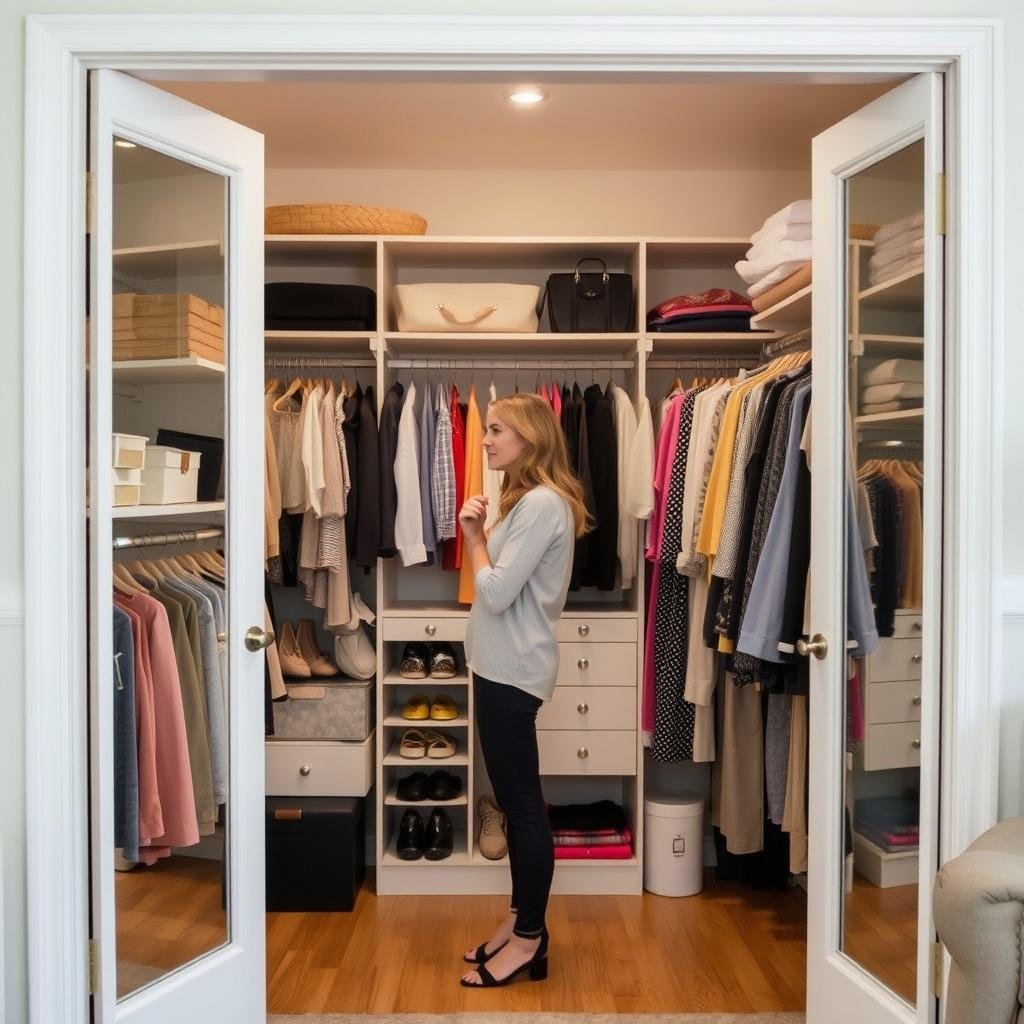
The “Keep, Donate, Toss” Method
Sort items into three piles:
- Keep: Clothes you love and wear often.
- Donate: Gently used pieces others could enjoy (try ThredUp’s program).
- Toss: Stained or damaged items beyond repair.
Pro tip: Use color-coded bins for speed. Label them clearly to avoid second-guessing.
Expert Tip: The 5-Outfit Rule
Lisa Adams advises: “If you can’t make five outfits with it, let it go.” This cuts decision fatigue fast. Test sentimental items with NEAT Method’s 12-month wear test—no wears? Thank it and move on.
Struggling to part with things? Try TikTok’s “Maybe Box”: Store doubtful items there for a month. Unused? Donate them guilt-free.
Step 2: Categorize Your Clothing and Accessories
Sorting your wardrobe by category turns chaos into clarity in minutes. Group similar clothing types together—dresses, tops, pants—so you can grab what you need fast. Pro tip: Store shoes vertically with dividers to save space and prevent scuffs.
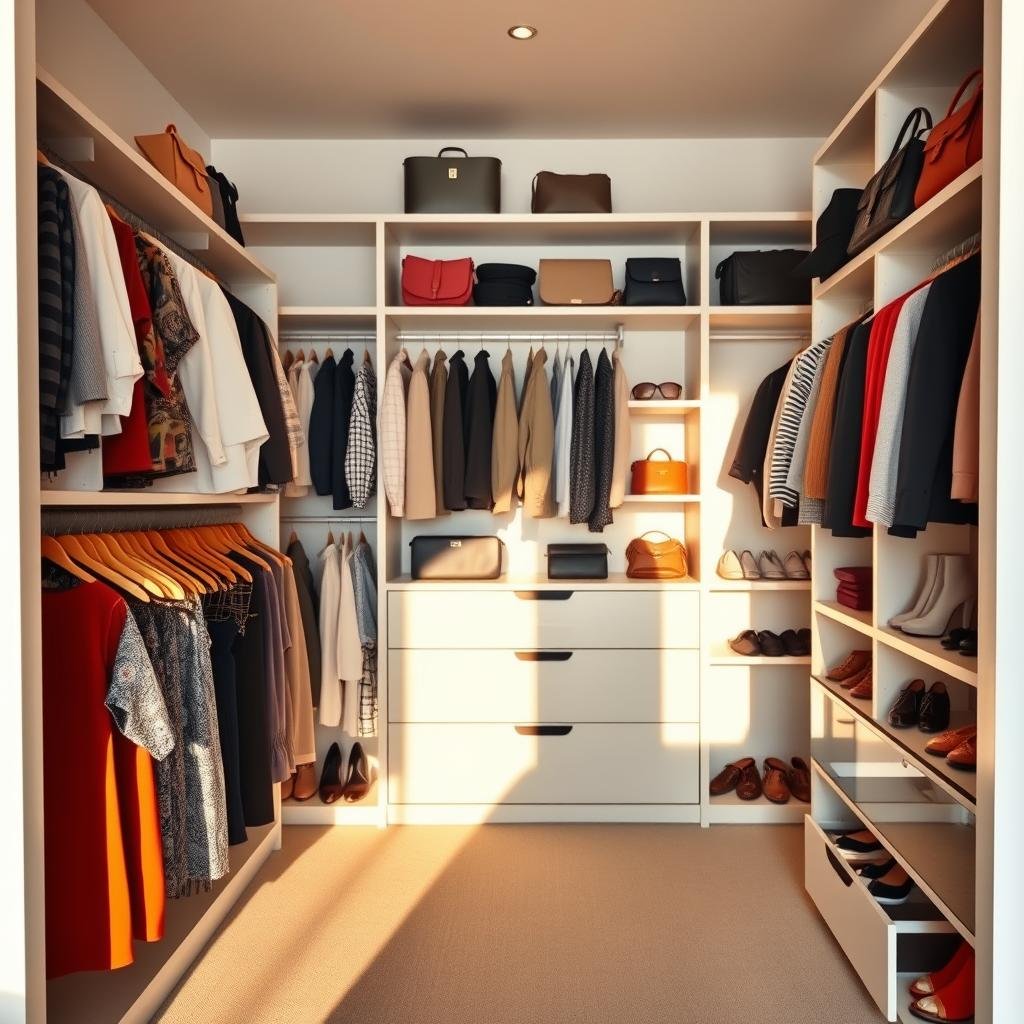
Sorting by Type
Create a “Frequent Flyer” zone for the 20% of items you wear 80% of the time. Use The Container Store’s labels to mark sections like workout gear or seasonal accessories. Marie Kondo’s vertical folding works wonders for drawers—stack jeans and sweaters upright to see every option.
Handling Sentimental Items
Keep items with emotional value visible but tidy. Clear bins from IKEA’s SKUBB line let you admire that concert tee without clutter. California Closets’ color-blocking system adds visual appeal while keeping type-based groups distinct. Remember: If it sparks joy but gathers dust, display it—don’t hide it.
Step 3: Measure Your Closet and Inventory
Precision is key when transforming your storage into a functional haven. Before adding any organizers, grab a laser measure from Home Depot for accurate dimensions. Knowing your exact closet space helps create a custom-fit solution that works.
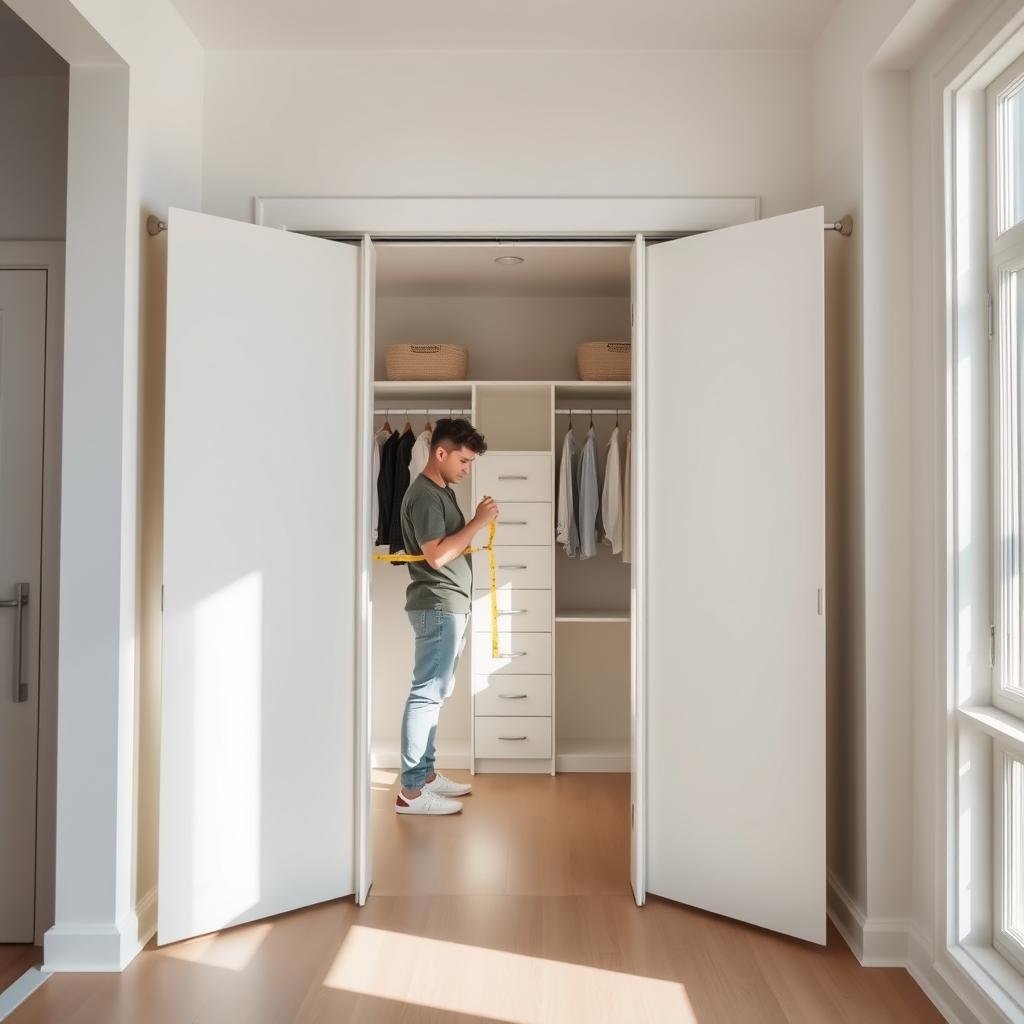
Tracking hanging space vs. shelves
Follow Pottery Barn’s 6:4 ratio—60% hanging area, 40% folded storage. This design balances quick access with space efficiency. Measure rod heights based on garment types:
- Shirts: 40-42 inches
- Dresses: 60-72 inches
- Pants (folded over hangers): 30-36 inches
Adjustable rod and shelf considerations
Boost capacity by 30% with adjustable rods (Third Source). Rubbermaid’s Configurations system lets you modify layouts as needs change. For shelves, apply Bed Bath & Beyond’s formula: 12-14 inches between tiers for most folded items.
Remember vertical space too! The top 18 inches of your space often goes unused. Install high shelves for seasonal items or bins. With smart measurements, you’ll create storage that grows with your wardrobe.
Top Storage Systems to Maximize Space
Smart storage solutions can turn even the smallest space into a functional masterpiece. Whether you’re renting or own your home, these three systems adapt to your needs. They help create that dream setup where everything has its perfect spot.
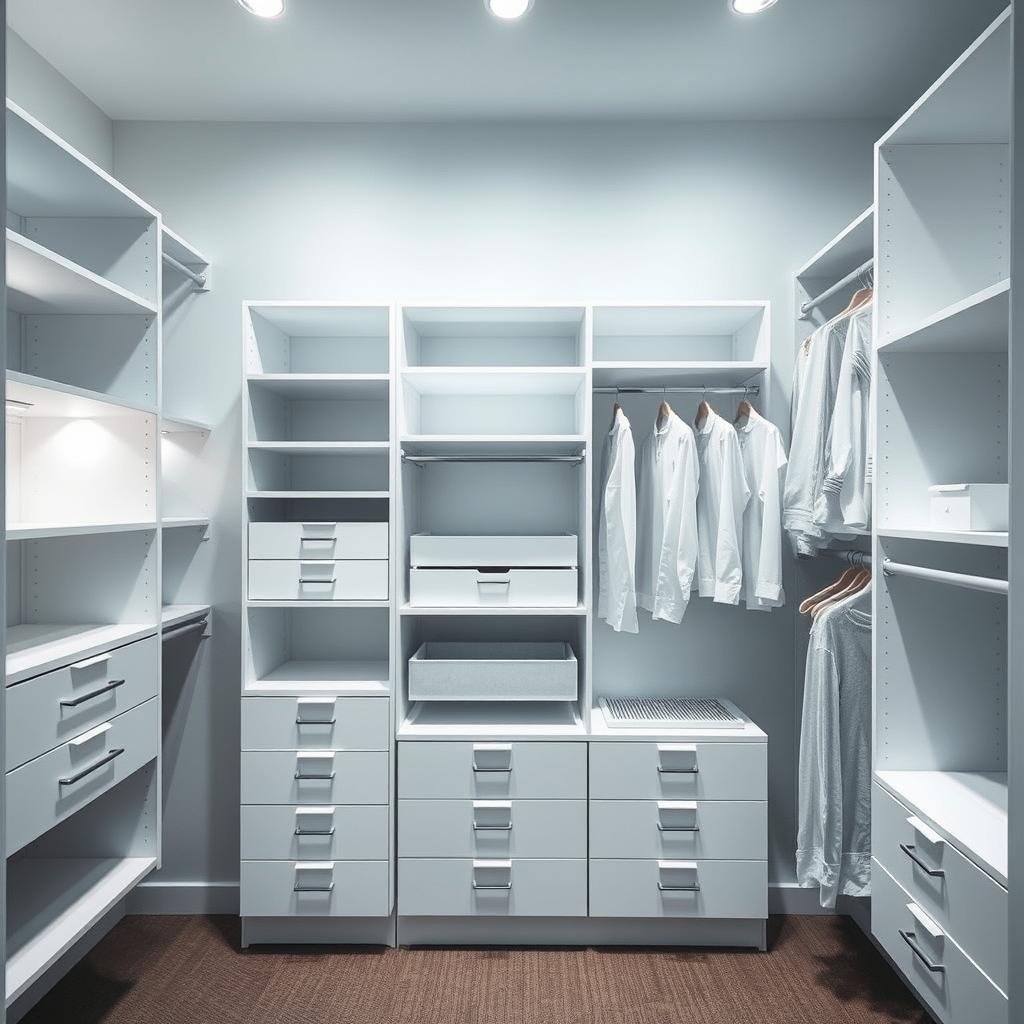
IKEA Boaxel: Budget-friendly modular design
The IKEA Boaxel series gives you custom looks without the high price tag. Starting at $200, its starter kit includes shelves, rods, and LED lighting options. Pro tip: Mix open shelves with woven baskets for a stylish yet affordable combo.
At $2.50 per square foot, it’s perfect for frequent rearrangers. The modular pieces snap together easily—no advanced DIY skills needed. Wirecutter staffers love how it grows with their changing storage needs.
Container Store Elfa: Premium durability
For long-term solutions, Container Store Elfa stands out with its 15-year lifespan. Though pricier ($550+ for 3ft), its steel framework handles heavy loads effortlessly. Use their online design tool to create your ideal configuration before buying.
The system shines for walk-in spaces needing serious organization. Maximize vertical space with their adjustable shelves—perfect for shoe collections or handbag displays. It’s an investment that pays off in daily convenience.
ClosetMaid Stackable: No-drill solution
Renters rejoice! ClosetMaid’s $150 stackable units require zero permanent changes. Available at Target, these wire shelves adapt as your wardrobe evolves. The open design keeps everything visible while preventing dust buildup.
Installation hacks: Use tension rods between units for extra hanging space. Combine with fabric bins from the same line for a cohesive look. It’s the ultimate apartment-friendly system that moves with you.
Bonus tip: Hybrid solutions work best for many. Pair Elfa’s sturdy frames with Boaxel’s affordable bins. Your perfect setup is just a few smart choices away!
Hanging vs. Folding: What Works Best
Did you know the way you store your clothes impacts their lifespan? Choosing between hanging and folding isn’t just about space—it’s about keeping your wardrobe in perfect condition. Let’s break down the smartest methods for different garments.
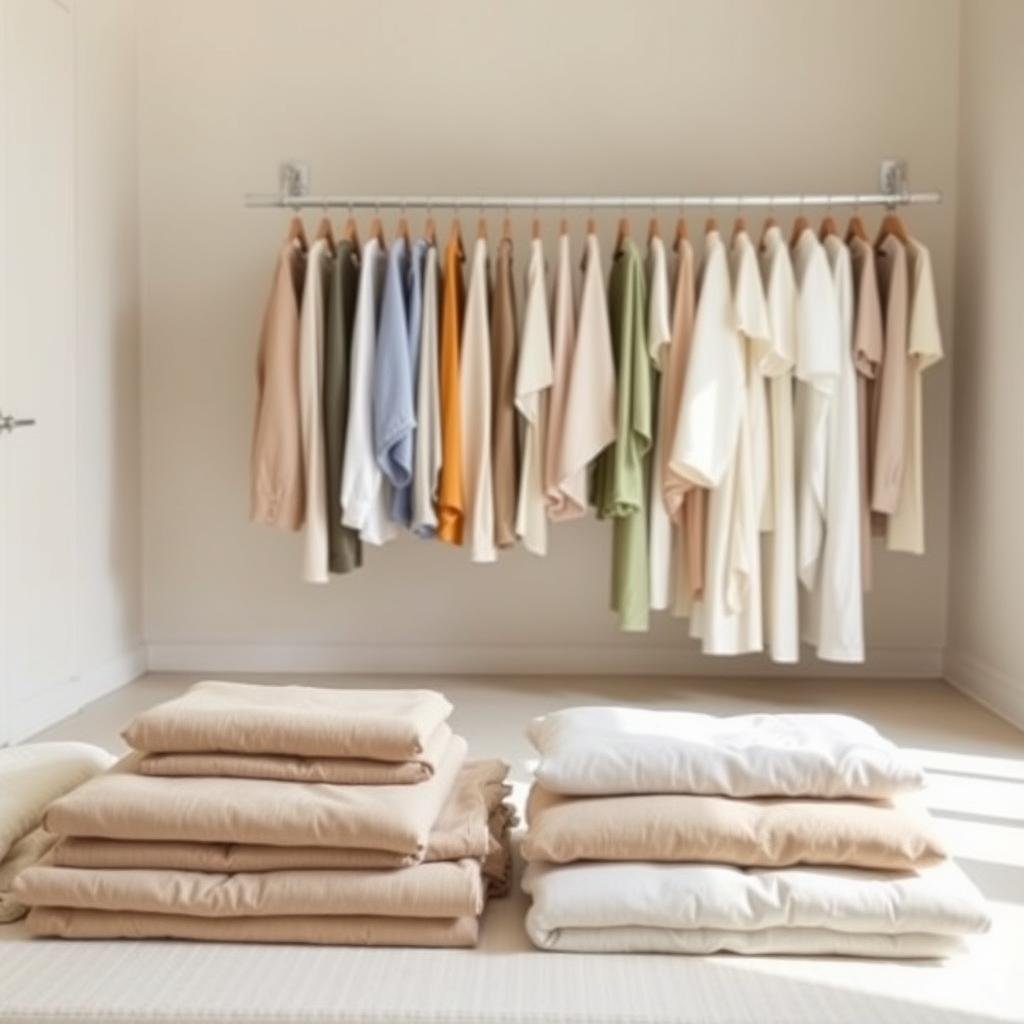
When to Hang Your Clothes
Delicate fabrics and structured pieces thrive on hangers. Silk blouses, dress shirts, and suits keep their shape best when hanging. Follow these pro tips:
- Use Huggable Hangers® for slippery fabrics—they prevent slips
- Space garments 1 inch apart to avoid wrinkles
- Button top buttons on shirts to maintain collar structure
The Art of Folding
Bulky sweaters and denim actually last longer folded. Proper folding reduces stretching by 70% according to Third Source research. Try these methods:
- Marie Kondo’s file folding for drawer visibility
- Nordstrom’s stacking technique for pants
- Store sweaters flat to prevent shoulder bumps
Bonus tip: The Container Store’s velvet hangers save space while protecting delicate fabrics. For suits, follow Brooks Brothers’ method—wooden hangers with shoulder contours.
Creative Hanging Storage Solutions
Small accessories often create big clutter—until now. With the right hangers and hooks, you can turn wasted vertical space into a functional display. These clever solutions keep scarves, belts, and pants visible while saving up to 12 inches per rod.
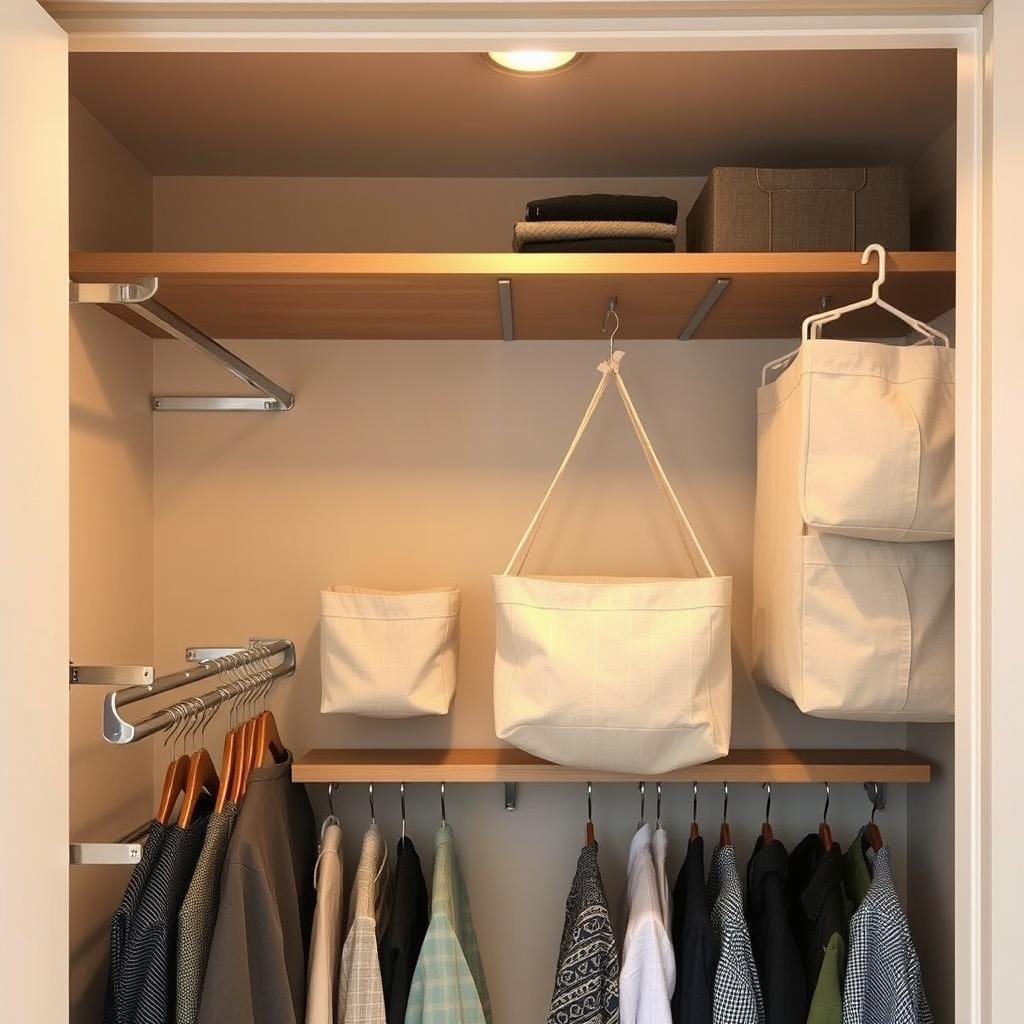
Scarf and belt organizers
Ditch the jumbled drawer for these pro-approved systems:
- Target’s space-saving tie rack works perfectly for thin belts
- California Closets’ acrylic accessories display keeps items dust-free
- REI’s gear loops handle outdoor bags and climbing ropes
For jewelry, Amazon’s 360° organizer shows every piece at a glance. No more digging!
Multi-tiered pants hangers
Stack your denim and slacks vertically with these winners:
- First Source’s 5-tier hangers save 60% more space than folding
- Bloomingdale’s velvet-lined versions prevent slippage
- IKEA’s KOMPLEMENT series includes matching shoe slots
Pro tip: Group by color on each tier for instant outfit planning. Your morning routine just got faster!
Maintaining Your Stress-Free, Streamlined Closet
Keep your space effortlessly tidy with simple weekly habits. Just 10 minutes of touch-ups prevents 90% of clutter recurrence, says Second Source. Stay ahead by assigning a “Last Chance” bin for donation debates—no second-guessing!
Color-coded laundry tags make re-hanging a breeze. Try The Home Edit’s quarterly refresh strategy to rotate seasonal items smoothly. Smart labels from Brother P-touch help you spot favorites instantly.
Follow Martha Stewart’s Five Finger Rule: If you can’t style an item five ways, it’s time to let go. With these tricks, you’ll maintain a system that works as hard as you do!