
Eating well doesn’t have to drain your wallet. With smart choices, you can enjoy nutritious meals while sticking to a tight budget. Focus on seasonal produce, whole grains, and affordable proteins like beans and eggs.
Frozen vegetables and canned fish pack the same nutrition as fresh options but cost less. Planning your meals ahead cuts down on impulse buys and waste. It also helps you balance your plate with fruits vegetables, proteins, and grains.
Did you know plant-based proteins cost 23-35% less than meat? A veggie burger made with canned beans and frozen veggies can cost just $2 per serving. Small changes add up to big savings—and better health.
Plan Ahead to Eat Healthy Without Breaking the Bank
Smart planning turns budget meals into nutrient-packed wins. With a few simple steps, you’ll save time and money while keeping your plate balanced. Start by mapping out your week—your future self will thank you.
Create Weekly Menus and Grocery Lists
Jot down a flexible menu before hitting the store. The USDA found that meal-planning apps reduce food waste by 23%. Try the 3-2-1 method: prep 3 proteins, 2 grains, and 1 soup base to mix and match.
Use Meal-Planning Apps for Efficiency
Apps like Paprika scale recipes, while Mealime filters by diet. Prepear even syncs with grocery lists. These tools help you shop smart and avoid last-minute takeout.
Prep Meals and Snacks on Weekends
Spend 2 hours prepping to save 4+ hours later. Chop veggies (they last 5–7 days in airtight containers) and batch-cook proteins. Freeze portions in Souper Cubes for grab-and-go meals. Roast a chicken? Repurpose it into wraps, salads, or soups.
Shop Smart to Maximize Nutrition and Savings
Smart shopping transforms your grocery trips into nutrition-packed wins. With a few tweaks, you’ll fill your cart with affordable, wholesome foods. Start by focusing on the store’s perimeter—that’s where fresh fruits, vegetables, and proteins live.
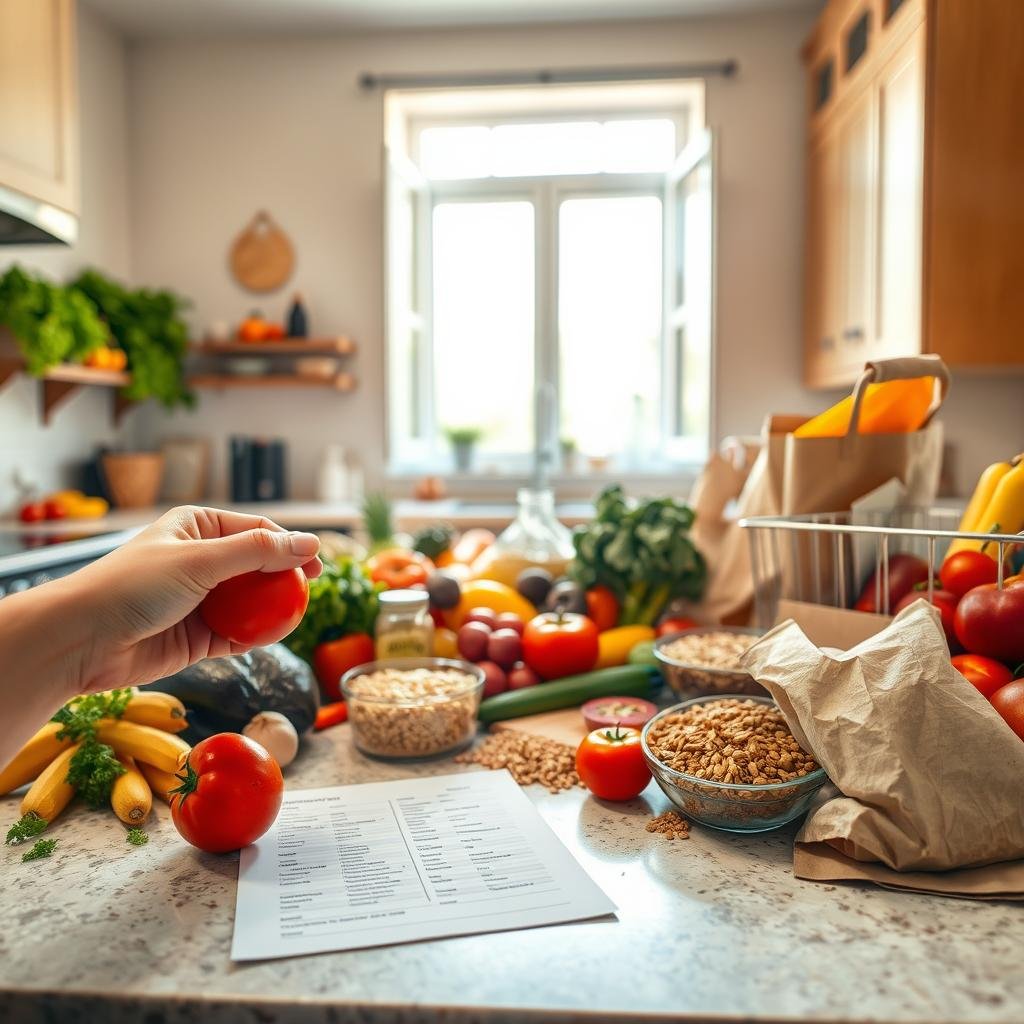
Prioritize Seasonal and Frozen Produce
Seasonal picks cost 30–50% less, according to USDA data. Think apples in fall or berries in summer. Frozen options like spinach or mixed vegetables retain 95% of their nutrients. They’re perfect for smoothies, stir-fries, or soups.
Leverage Coupons and Store Rewards
Stack digital coupons with loyalty programs at chains like Kroger. Check weekly sale flyers before you shop. Generic brands often match name brands in quality but save you 25% or more.
Skip Packaged Foods for Whole Alternatives
Pre-cut veggies or flavored rice cost extra. Buy whole fruits, bulk grains, and raw ingredients instead. Use the Clean Fifteen list to prioritize organic choices when needed. A ripe avocado adds creaminess without breaking your budget.
Build a Budget-Friendly Pantry with Staples
A well-stocked pantry is your secret weapon for affordable, nutritious meals. Focus on versatile, shelf-stable items that stretch your dollars. With the right basics, you’ll whip up recipes without last-minute takeout.
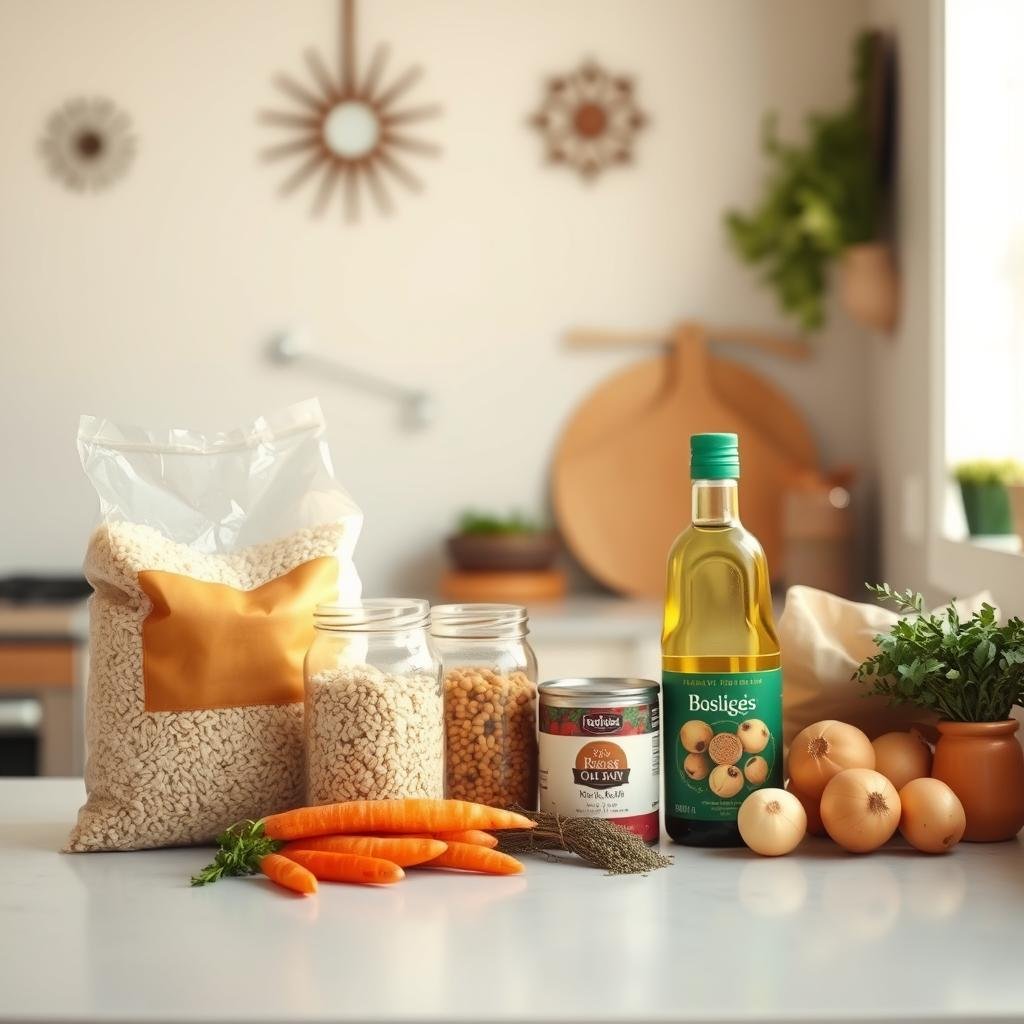
Stock Up on Whole Grains and Legumes
Whole grains like brown rice and quinoa offer fiber and protein. Dry lentils cost just $0.15 per serving—10x cheaper than canned. Store them in airtight containers to keep freshness for months.
Oats and barley are perfect for breakfasts or soups. Buy in bulk to slash costs. A $50 starter pantry could include:
- Rolled oats
- Canned tomatoes
- Brown rice
Opt for Affordable Proteins Like Eggs and Canned Fish
Eggs deliver protein at $0.17 each. Canned sardines pack 23g of protein per dollar. Compare that to chicken at $3.99/lb. These kitchen staples add nutrients without straining your budget.
Dry beans are another wallet-friendly pick. Soak overnight to cut sodium and save cash. Use them in chili, salads, or tacos.
Use Low-Sodium Seasonings for Flavor
Skip pricey sauces. Bulk spices like cumin or paprika save 80% vs. grocery jars. Toast them in a dry pan to intensify flavors. Herb-infused oils or garlic powder jazz up simple dishes.
Try 3-ingredient meals: canned tuna + whole-wheat pasta + frozen peas. Fast, cheap, and delicious.
Cook Once, Eat Multiple Times: Batch Cooking Strategies
One cooking session can fuel your week with delicious, budget-friendly meals. Batch cooking slashes costs by 27% (PNAS study) and frees up your time. Imagine fewer dishes, less stress, and more flavor—all from a single effort.
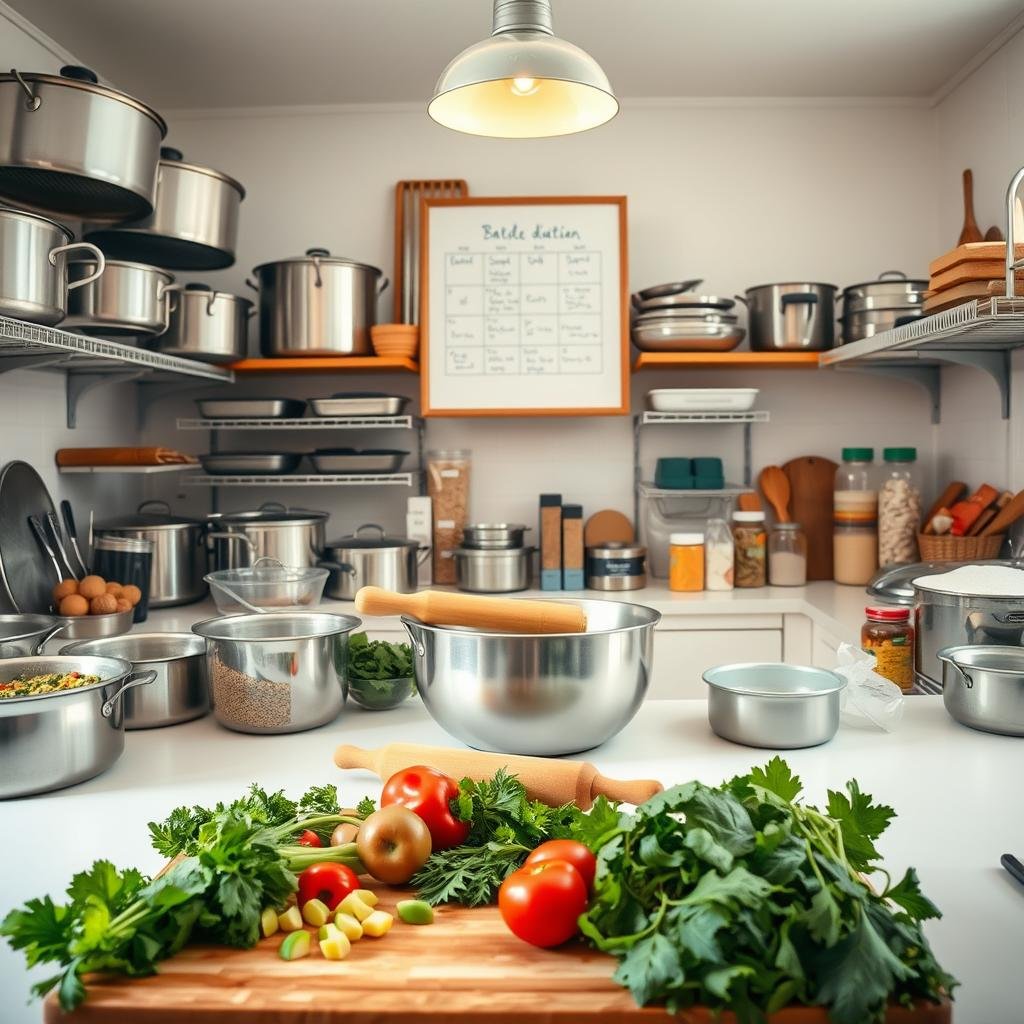
Master One-Pot Meals for Easy Leftovers
Think big: soups, stews, or pasta bakes. These dishes taste better the next day. Undercook grains by 2 minutes to preserve texture when reheating. Try lentil chili or veggie lasagna—they freeze perfectly.
Repurpose Leftovers into New Dishes
73% of cooks reinvent leftovers 2–3x weekly (Ziploc). Roast chicken becomes tacos or soup. Sautéed vegetables? Toss them into omelets or grain bowls. Creativity stretches your food further.
Freeze Portions for Hassle-Free Meals
Soups stay fresh for 3 months in the freezer (FDA). Use Souper Cubes for single servings. Label containers with dates to avoid waste. Future you will love grabbing a homemade meal in minutes.
Involve Your Family in Healthy Eating Habits
Turning mealtime into family time boosts nutrition and savings. Research shows kids who cook eat 76% more vegetables, while shared meals cut costs by 18%. These simple ways make your home a hub for smart choices.
Teach Kids to Read Nutrition Labels
Transform grocery trips into learning adventures. The FDA’s %DV system becomes a “nutrition detective” game—have kids spot sugar in cereal or fiber in bread. NIH studies prove label literacy improves diets by 41%.

- Compare serving sizes between similar options
- Look for whole grains as the first ingredient
- Choose fruits packed in water, not syrup
Assign Meal Prep Roles to Share the Work
Teamwork makes dream work in the kitchen. Toddlers can wash berries, while teens plan recipes. Try these age-appropriate tasks:
- Ages 3-5: Tear lettuce or mix ingredients
- 6-12: Measure dry goods or set the table
- Teens: Lead one weekly meal from start to finish
Utah State University found this approach reduces stress and food waste. Bonus: Kids who cook become adults who make better choices.
Make Mealtimes Social and Enjoyable
Laughter and learning belong at the dinner table. Try conversation starters like “Which vegetable would you be and why?” Monthly “Chopped” challenges with pantry leftovers spark creativity.
Ten crowd-pleasing recipes keep things exciting:
- Hidden veggie mac & cheese (cauliflower boosts nutrition)
- Build-your-own taco bar with beans and vegetables
- Overnight oats with seasonal fruits
When meals feel special, everyone leaves the table nourished—in body and connection.
Embrace Affordable and Nutritious Eating for Life
Affordable nutrition isn’t a compromise—it’s a smart lifestyle shift. Consistent planners save $2,600 yearly (USDA), proving small choices add up. Start with the 80/20 rule: cook 80% at home, leaving room for flexibility.
Pair meal prep with podcasts or audiobooks to save time. Home cooks eat 67% less sugar (Johns Hopkins), and 92% stick to healthier habits long-term (FDA). Your kitchen becomes a tool for wellness.
Build sustainable ways to thrive:
– Audit your pantry quarterly to rotate seasonal vegetables.
– Try free SNAP-Ed recipes or local cooking classes.
– Involve your family—kids who cook eat more veggies.
Every smart choice fuels a lifetime of vibrant, budget-friendly meals.