Introduction
Ever feel like your home is working against you? Clutter can drain your energy, cloud your focus, and make everyday tasks feel more overwhelming. Studies suggest the average American household contains around 300,000 items—many of which are rarely used or completely forgotten. The good news? There’s a better way.
Marie Kondo inspired a global movement by showing that tidying up transforms more than just your home. When you remove unnecessary clutter, you create more space for peace, clarity, and freedom. Your surroundings become calmer, and your daily life feels lighter. Even small changes—like organising a single drawer—can boost motivation and create a sense of accomplishment.
Ready to refresh your environment? In this guide, you’ll discover 10 simple decluttering techniques to help transform any room in your home. Whether you’re tackling a seasonal clean-out or embracing a more intentional lifestyle, these practical methods can help reduce stress, increase focus, and create a calm, organised home that truly supports your wellbeing.
Why Decluttering Techniques Matter for a Stress-Free Home
Your home should be a sanctuary, not a source of daily stress. Walk into a cluttered room, and you’ll feel it instantly—the pile of dishes, the mountain of laundry, or the faint smell of dust. Now imagine the opposite: fresh air, clear surfaces, and a place for everything. That’s the power of an organised home.
Science supports this idea. Research has found that tidy living spaces are associated with lower stress levels because they reduce the constant visual distractions that compete for your attention. Clutter can also make everyday life less efficient. Many people spend a surprising amount of time searching for misplaced items, adding unnecessary frustration to their daily routine.
Clutter also contributes to decision fatigue. Have you ever stood in front of an overflowing wardrobe, unsure what to wear, or searched through a crowded drawer for a pair of scissors? Every small decision uses mental energy. For many people, physical clutter can also reflect emotional attachments, making it difficult to let go of belongings. As Marie Kondo reminds us, “It can give items more meaning.” However, keeping everything can prevent us from fully appreciating the things that truly matter.
The good news is that even small changes can bring immediate benefits. You’ll spend less time cleaning, avoid buying duplicate items, and feel more confident welcoming friends and family into your home. A clutter-free space is also easier to keep clean and can help reduce hidden issues, such as expired food lurking in the back of cupboards.
Ready to reclaim your calm? The following simple decluttering techniques will help you create a more organised, peaceful home—one step at a time.
The 10-10 Method: Quick Wins for Busy Spaces
Looking for a simple way to start decluttering? The 10-10 Method is one of the easiest decluttering techniques to build momentum. In just 10 minutes, you can make noticeable progress without feeling overwhelmed. Small, consistent actions often lead to lasting results.
How It Works
Set a timer for 10 minutes and choose 10 items to throw away, donate, recycle, or return to their proper place. Once the timer ends, stop—even if you feel you could do more. The goal is to create a sustainable habit rather than aiming for perfection. Repeat the process daily, and you’ll soon notice a significant difference.
Ideal for Bathrooms, Pantries, and Drawers
Bathroom
- Dispose of expired medications safely according to your local guidelines.
- Recycle empty bottles and throw away old or unused toiletries.
Pantry
- Rotate older food items to the front using the First In, First Out (FIFO) method.
- Check expiry dates and donate unopened, in-date food that you no longer need.
- Group similar items together to make meal planning easier.
Drawers
- Remove broken or unused items.
- Sort similar items into small organisers or containers.
- Turn tidying into a fun activity by involving the whole family.
Make It Easier
- Listen to your favourite podcast or music while you declutter.
- Donate clean towels, blankets, or household items to local charities or animal shelters if they accept them.
- Check expiry dates regularly to avoid unnecessary stockpiling and waste.
Just 10 minutes a day can make a remarkable difference. These small, consistent steps will help you simplify your space, reduce stress, and create a calmer, more organised home.
Gradual Decluttering: Small Steps, Big Results
Small daily actions can create lasting change without leaving you feeling overwhelmed. Instead of spending an entire weekend decluttering, focus on making a little progress each day. One simple approach is the laundry basket method: place misplaced items into a basket as you notice them. At the end of the week, sort the contents by returning items to their proper place, donating what you no longer need, or recycling where possible.

The 3 Core Steps
Think of your home as a series of small, manageable steps rather than one enormous project. Place a basket on each floor or in frequently used areas of your home. As you move through the day, place any out-of-place items into the basket. Set aside a few minutes each week to empty the baskets and return everything where it belongs.
Next, simplify your kitchen by keeping only the utensils and gadgets you use regularly within easy reach. Store less frequently used items elsewhere. If you haven’t used them after several weeks or months, consider donating them to someone who will.
Setting Up a Donation Box
Keep a dedicated donation box or basket near your front door, in a hallway, or in another convenient location. Choose a container that blends naturally with your décor so it becomes part of your everyday routine rather than something hidden away.
To stay consistent, schedule a regular donation day in your calendar or set a reminder on your phone. When the box is full, take it straight to your car or plan your next trip to a local charity shop or donation centre. Removing items from your home promptly helps prevent second thoughts and keeps your decluttering progress moving forward.
Remember, lasting change comes from consistent habits, not perfection. By taking small steps every day, you’ll gradually create a calmer, more organised home with far less stress.
The Ski Slope Method: A Systematic Room-by-Room Decluttering Technique
Feeling overwhelmed by a large decluttering project? The Ski Slope Method helps you tackle one area at a time, making even the busiest rooms feel more manageable. Instead of jumping from one task to another, you’ll work through your space in a logical, organised way until every section is complete.

Visualise Your Space in Sections
Imagine your room as a ski slope divided into smaller, manageable zones. Begin with the easiest area, then gradually work towards the more challenging sections. This step-by-step approach helps you maintain focus and prevents you from feeling overwhelmed.
You can use painter’s tape, sticky notes, or simply divide the room mentally into sections. Work methodically from one side of the room to the other, completing each area before moving on. This reduces the chance of overlooking clutter and provides a clear sense of progress.
Taking a few “before” photos can also be highly motivating. As each section is completed, you’ll see how much your efforts have transformed the space.
Best for Large or Overwhelming Spaces
The Ski Slope Method works especially well in areas that often feel difficult to organise, including:
- Garages
- Lofts or attics
- Basements
- Spare bedrooms
- Home offices
- Storage rooms
Set a timer for 20 to 30 minutes and focus on just one section during each session. Take a short break before continuing if needed. Consistent progress is far more effective than trying to complete everything in one day.
Stay Focused on One Area at a Time
Avoid moving randomly around the room. Completing one section before starting the next creates visible progress and keeps your motivation high. As each area becomes clutter-free, you’ll build momentum and feel encouraged to continue.
The Ski Slope Method reminds us that even the largest decluttering projects begin with a single step. By breaking your home into smaller, achievable sections, you’ll create a calmer, more organised living space without feeling overwhelmed.
KonMari Method: Keep Only What Sparks Joy
The KonMari Method, created by Marie Kondo, is one of the world’s most popular decluttering techniques. Rather than simply organising your belongings, it encourages you to create a home filled with items that genuinely add value to your life. The guiding principle is simple: keep only the possessions that truly spark joy.
Declutter by Category, Not by Room
Instead of moving from room to room, the KonMari Method recommends sorting your belongings by category. This helps you see exactly how much you own and makes it easier to decide what to keep.
Start with categories such as:
- Clothing: Hold each item and ask yourself whether you enjoy wearing it or if it makes you feel confident and comfortable.
- Books: Keep the books you genuinely love or plan to read again, and donate those that no longer serve a purpose.
- Papers: Recycle unnecessary documents and organise the important ones into clearly labelled folders.
- Sentimental items: Leave these until last, as they are often the most difficult to sort through.
Practise Gratitude as You Declutter
Letting go of possessions can sometimes be emotional. Before donating or recycling an item, take a moment to appreciate the role it played in your life. A simple “Thank you for serving your purpose” can make it easier to move forward without guilt.
Remember that joy isn’t limited to decorative items. Practical belongings, such as tools or kitchen equipment, can also bring value if they help make everyday life easier and safer.
Tips for Success
- Fold clothes neatly to maximise drawer space and keep everything visible.
- Avoid rushing the process—thoughtful decisions create lasting results.
- Focus on keeping what adds value to your life rather than simply reducing the number of possessions.
- Donate usable items whenever possible so they can benefit someone else.
The KonMari Method isn’t about creating a perfectly minimalist home. It’s about surrounding yourself with possessions that support your lifestyle, reflect your values, and help create a calmer, more organised living space.
The Four-Box Method: Make Decluttering Decisions Faster
One of the biggest challenges when decluttering is deciding what to keep and what to let go of. The Four-Box Method simplifies the process by giving every item an immediate destination, helping you stay focused and avoid decision fatigue.
Label Four Boxes
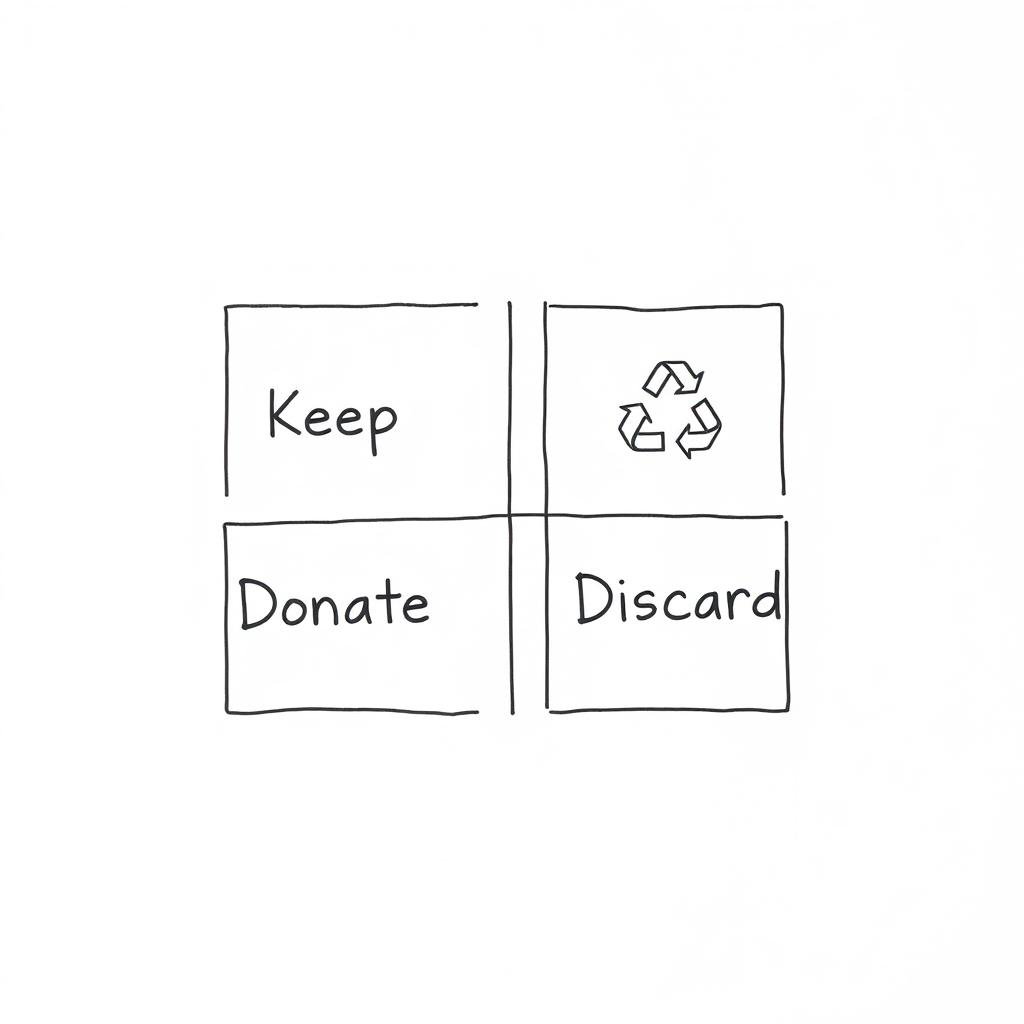
Prepare four boxes or containers and label them:
- Keep – Items you use regularly or truly value.
- Donate – Good-quality items that could benefit someone else.
- Sell – Valuable belongings you no longer need but would like to sell.
- Recycle or Trash – Broken, damaged, or unusable items that can no longer serve a purpose.
As you pick up each item, place it directly into one of the four boxes. Avoid creating a “maybe” pile, as it often leads to more clutter and delays your progress.
Perfect for Small Decluttering Projects
The Four-Box Method works especially well for tackling smaller spaces, such as:
- A wardrobe
- One kitchen cupboard
- A bathroom cabinet
- A garage shelf
- A desk drawer
Focus on one area at a time until it is completely finished before moving on to the next. Completing small projects builds confidence and keeps your motivation high.
Helpful Tips
- Keep a donation box in your home or car so you’re always ready to donate unwanted items.
- Take photos of items you plan to sell before storing them away, making it quicker to create online listings later.
- If an item has little financial value, consider donating it instead of spending time trying to sell it.
- Schedule regular trips to your local charity shop or recycling centre to prevent donation boxes from piling up.
The Four-Box Method makes decluttering decisions quicker, easier, and far less stressful. By giving every item a clear destination, you’ll create a more organised home and develop lasting decluttering habits.
Swedish Death Cleaning: Decluttering with Purpose
Despite its unusual name, Swedish Death Cleaning is a thoughtful decluttering technique that encourages you to simplify your belongings during your lifetime. The goal isn’t to focus on death but to create a more organised home while making life easier for yourself and your loved ones in the future.
Focus on Legacy, Not Clutter
Begin by sorting through sentimental belongings and asking yourself which items truly reflect your life, values, and memories. Consider keeping only the possessions that hold genuine meaning, and think about who might appreciate them in the future.
You may find it helpful to label treasured heirlooms with a short note explaining their history or significance. Writing down the stories behind special keepsakes can preserve precious memories while reducing the number of physical items you keep.
Remember that letting go of possessions doesn’t mean letting go of the memories attached to them. By choosing what to keep intentionally, you create space for the things that matter most.

Start with Attics, Basements, and Storage Areas
Begin with spaces that are often filled with forgotten belongings, such as:
- Attics
- Basements
- Garages
- Loft spaces
- Storage cupboards
As you sort through each area, divide items into simple categories:
- Keep – Items you regularly use or genuinely value.
- Donate – Useful items that could benefit someone else.
- Recycle – Materials that can be recycled responsibly.
- Dispose – Broken or unusable items that can no longer be repaired.
Always dispose of hazardous materials, such as old paint, chemicals, or batteries, according to your local recycling guidelines.
A Thoughtful Approach to Decluttering
Swedish Death Cleaning encourages mindful decision-making rather than rushing to throw things away. By focusing on what truly matters, you can reduce clutter, preserve meaningful memories, and create a calmer, more organised home for yourself and for future generations.
The Minimalism Game: A 30-Day Decluttering Challenge
Looking for a fun and motivating way to simplify your home? The Minimalism Game is a popular decluttering challenge that encourages you to remove one more item each day for 30 days. By the end of the month, you’ll have removed 465 items, making a noticeable difference without feeling overwhelmed.
Follow the Daily Challenge
The rules are simple:
- Day 1: Remove 1 item.
- Day 2: Remove 2 items.
- Day 3: Remove 3 items.
Continue adding one extra item each day until Day 30, when you’ll remove 30 items.
To stay motivated, keep track of your progress using a calendar, habit tracker, or journal. Watching your progress build day by day can make the challenge even more rewarding.
Ideas for Each Day
If you’re unsure where to begin, try focusing on a different category each day:
- Technology: Old chargers, unused cables, and outdated electronics.
- Children’s Items: Toys, games, and clothes that are no longer used.
- Paperwork: Old magazines, expired warranties, and unnecessary documents.
- Kitchen: Duplicate utensils, mugs, and unused gadgets.
- Wardrobe: Clothes, shoes, and accessories you no longer wear.
Stay Accountable
Everything is easier with encouragement. Invite a friend or family member to join the challenge and celebrate your progress together. Sharing updates can help you stay motivated and make the process more enjoyable.
If you’re finding it difficult to part with sentimental belongings, consider taking a photograph before donating or recycling them. Keeping the memory without keeping every physical item can make letting go feel much easier.
The Minimalism Game is an enjoyable way to build consistent decluttering habits. By taking small steps every day, you’ll create a calmer, more organised home while discovering how little you truly need to live comfortably.
One In, One Out: A Simple Rule for Lasting Organisation
Keeping your home organised doesn’t stop once you’ve finished decluttering. The One In, One Out Rule is a simple habit that helps prevent clutter from building up again. Every time you bring a new item into your home, remove one you no longer use or need. This easy practice keeps your living space balanced and encourages more mindful shopping habits.
Apply the Rule to Everyday Shopping
Before buying something new, ask yourself:
“What will I remove to make room for this?”
For example, if you buy a new coat, consider donating one you no longer wear. If you purchase new kitchen gadgets, recycle or donate older ones that have been replaced.
Another helpful strategy is the hanger method. Turn all your clothes hangers backwards. After wearing an item, return the hanger the correct way around. After several months, you’ll quickly identify the clothes you rarely wear, making it easier to decide what to donate.
Prevent Future Clutter
Creating simple limits can help keep clutter under control over the long term.
Try these practical habits:
- Limit jewellery to the space available in your jewellery box.
- Unsubscribe from promotional emails to reduce impulse purchases.
- Store reusable gift bags neatly in one designated place.
- Keep one folder or storage box for each child’s artwork and memories.
- Review seasonal decorations each year and donate anything you no longer display or enjoy.
Build a Lasting Habit
The One In, One Out Rule isn’t about owning less—it’s about owning what truly adds value to your life. By making thoughtful decisions before bringing new items home, you’ll maintain a calmer, more organised living space and spend less time managing clutter in the future.
Room-Specific Decluttering Techniques
Transform your busiest rooms with smart, targeted strategies. A one-size-fits-all approach rarely works—your kitchen, closet, and garage each need unique solutions. Here’s how to conquer them without overwhelm.
Kitchen: The “Expiration Date” Sweep
Your kitchen hides expired goods. Start with spices—toss anything older than a year (they lose flavor). Use FIFO (First In, First Out): Move newer cans to the back. OXO pop containers keep flour fresh and visible.
Pro tips:
- Label shelves: “Snacks,” “Baking,” “Quick Meals”
- Donate unopened extras to food banks
- Check sunscreen dates—they expire too!
Closet: The “One-Year Rule” for Clothing
Flip all hangers backward. As you wear items, turn them right-side up. After a year, donate untouched pieces. Bombas socks even replace donated pairs for shelters.
For kids’ closets:
- Keep a “too small” bin for quick swaps
- Use hooks for frequently worn jackets
- Store off-season clothes under beds
Garage: The “Seasonal Use” Test
Divide your garage into four zones—one per season. Label bins clearly: “Winter Gear,” “Camping.” If an item hasn’t been used in 12 months, sell or donate it. Hazardous items? Check local recycling rules.
Quick wins:
- Mount bikes to free floor space
- Use pegboards for tools (no more lost screwdrivers!)
- Donate old sports equipment to schools
For digital-age clutter, the next section reveals how to tame your inbox and photos. Ready to reset?
Room-Specific Decluttering Techniques
Every room in your home serves a different purpose, so each one benefits from a tailored decluttering approach. Instead of trying to organise your entire home at once, focus on one room at a time. These room-specific decluttering techniques can help you simplify your space more efficiently and maintain an organised home.
Kitchen: Clear Out Expired and Unused Items
The kitchen is one of the easiest places for clutter to build up. Begin by checking cupboards, the pantry, and the refrigerator for expired food, duplicate ingredients, and kitchen gadgets you no longer use.
Helpful tips:
- Check expiry dates on food, spices, and cooking ingredients.
- Use the First In, First Out (FIFO) method by placing older products at the front and newer ones at the back.
- Group similar items together, such as baking supplies, snacks, and canned goods.
- Donate unopened, in-date food to local food banks where possible.
Wardrobe: Follow the One-Year Rule
If you haven’t worn an item of clothing in the past year, ask yourself whether you truly need to keep it. The One-Year Rule is a simple way to identify clothes that no longer suit your lifestyle.
To make the process easier:
- Turn all clothes hangers backwards and flip them after wearing each item.
- Create a donation bag for clothes that no longer fit or that you no longer wear.
- Store seasonal clothing separately to create more wardrobe space.
- Organise clothes by category to make getting dressed quicker and easier.
Garage and Storage Areas: Sort by Season
Garages, sheds, and storage spaces often collect items that are rarely used. Organising these areas by season makes it easier to find what you need throughout the year.
Try these practical ideas:
- Store seasonal equipment in clearly labelled containers.
- Mount bicycles and larger equipment to free up floor space.
- Use pegboards or wall storage to organise tools.
- Donate or sell items you haven’t used in the past 12 months.
- Dispose of hazardous materials responsibly by following your local recycling guidelines.
Keep Every Room Organised
Decluttering one room at a time makes the process feel far more manageable. By using simple techniques that match each space, you’ll create a cleaner, more organised home that’s easier to maintain every day.
Digital Decluttering: Organise Your Virtual Space
Decluttering isn’t limited to your home. Your digital space can also become crowded with unread emails, duplicate photos, unused apps, and disorganised files. Taking a few minutes each week to organise your digital life can improve productivity, reduce stress, and make it easier to find what you need.

Organise Emails, Photos, and Apps
Start with the digital areas you use every day.
Emails
- Check your inbox regularly and reply, archive, or delete emails as soon as possible.
- Unsubscribe from newsletters and promotional emails you no longer read.
- Create folders or labels to organise important messages.
Photos
- Delete blurry, duplicate, or unwanted images.
- Organise photos into clearly named folders by year, event, or occasion.
- Back up important memories using cloud storage or an external hard drive.
Apps
- Remove apps you no longer use.
- Organise your home screen by grouping similar apps into folders.
- Turn off unnecessary notifications to reduce distractions and improve focus.
Create a Weekly Digital Decluttering Routine
A simple weekly routine can prevent digital clutter from building up.
Try these habits:
- Monday: Clear your downloads folder.
- Wednesday: Organise your desktop files into labelled folders.
- Friday: Back up important documents and photos.
- Weekend: Review your apps and remove anything you no longer need.
Build Better Digital Habits
Just like physical clutter, digital clutter grows over time if it’s ignored. By spending a few minutes each week organising your emails, files, photos, and apps, you’ll create a cleaner digital environment that’s easier to manage and far less overwhelming.
A well-organised digital space supports a calmer mind, saves valuable time, and complements the organised home you’ve worked so hard to create.
Continue Your Home Organization Journey
Looking for more practical tips? Explore these related LifeFuel365 guides to help you create a calmer, more organized, and stress-free home.
Related LifeFuel365 Articles
- Designing Efficient Storage Solutions: Tips & Tricks
- Discover the Advantages of a Well-Organized Home
- Simplifying Home Tasks: Tips for a Stress-Free Living
- Organizing Your Home: Tips for Functional Spaces
- Closet Organization Tips: Maximizing Space and Accessibility
- Tips for Maintaining Consistent Cleaning Habits
Helpful External Resources
Conclusion: Start Your Decluttering Journey Today
Creating a calmer, more organised home doesn’t happen overnight. It begins with one small decision, one drawer, one cupboard, or one room at a time. By applying these simple decluttering techniques, you’ll gradually reduce clutter, simplify your space, and create a home that supports your wellbeing every day.
Remember, decluttering isn’t about striving for perfection or getting rid of everything you own. It’s about surrounding yourself with the belongings that serve a purpose, bring you joy, and make everyday life easier. Whether you choose the KonMari Method, the Four-Box Method, the One In, One Out Rule, or another approach, every small step brings you closer to a more peaceful and organised living environment.
Start today by choosing just one area of your home. Spend 10 or 15 minutes clearing a drawer, organising a shelf, or donating a few unused items. Small, consistent actions create lasting habits, and those habits can transform your home over time.
A clutter-free home can help reduce stress, improve focus, and make everyday life feel simpler. The journey begins with a single step—and your future self will thank you for taking it.
LifeFuel365 Thought
“A calmer home begins with one simple choice. Every item you release creates more space for peace, purpose, and the life you truly want to live.”